This
Yom Kippur left me with an experience I know I will carry with me for a long
time. I have spent many Yom Kippurs in synagogue, but Yom Kippur 2026 at our
Ariel Synagogue in Atlanta unfolded in a way I could never have expected. What
began as a familiar day of fasting and prayer became something deeply personal
– a lesson about faith and inner strength.
Everything
began as usual. The preparations, the beginning of the holiday, the morning
prayers. We came to our comfortable American synagogue, immersed ourselves in
prayer, and, holding up well through the fast, made it to the afternoon break.
As we were returning around five o’clock, we learned that the power had gone
out in the synagogue and throughout the surrounding area. No rain, no wind – a
perfectly clear sky. The first half-joking thought came naturally: Satan’s
mischief on Yom Kippur!
Each
person who entered paused for a moment in confusion, then calmly made their way
to their respective prayer hall and joined the service. No one knew what would
happen next. But one thing was clear: this was the holiest day of the year, and
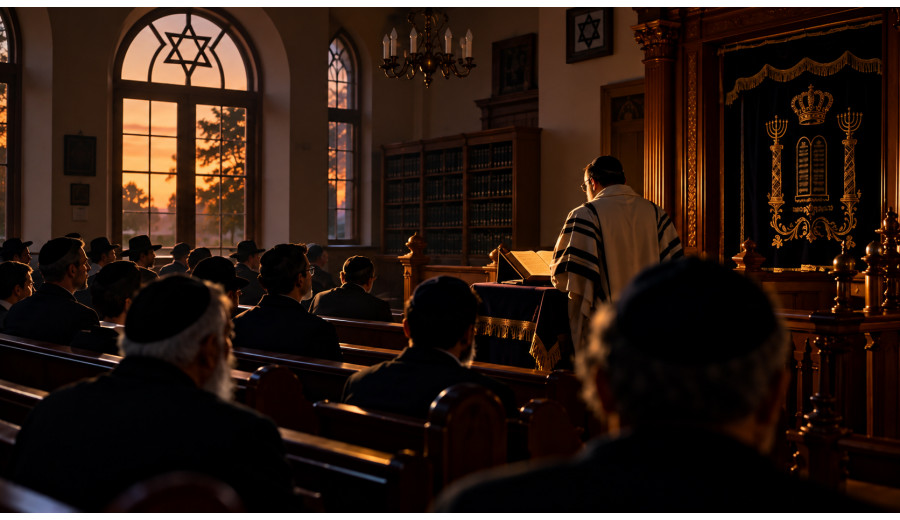
the prayers had to continue. In the Ashkenazi hall, the emergency lights came
on. The Sephardic congregation was less fortunate. Yet the chazzan continued
reading with remarkable precision, the rabbi guided the congregation, and
people followed the lines in their siddurim as closely as they could,
responding to the prayers.
Meanwhile,
the sun was slowly setting. With every passing minute, the room grew darker and
hotter, while more and more people arrived. By evening, the hall was packed. It
was becoming almost impossible to make out the lines in the siddur, yet the
chazzan’s voice never faltered. Finally, the rabbi announced that the
electricity would not be restored that day. When the time came to blow the
shofar, everyone would go outside. But not a single person left the hot,
darkened room. The chazzan, now singing almost entirely from memory, continued.
The rabbi guided and prompted us. The congregation responded together and
joined in: “Mi Kel Kamocha…” The voices flowed through the darkness, and
suddenly the presence of the person standing beside you could be felt with
extraordinary intensity. We were no longer simply people gathered in one room –
we had become one. And I thought: can a power outage really stop Jews on Yom
Kippur?
The
final prayer – Neilah, the culmination of the day – took place in almost
complete darkness. Then, exhausted from fasting and the heat, the congregation
poured outside. The police officer stationed by the synagogue gates, seemingly
taking pity on us, turned his headlights toward our siddurim so that we could
see the pages. The chazzan continued the prayers. Only the final moments
remained. And then came the moment for the shofar… At that very instant – as
though someone had been waiting for precisely that second – the lights flashed
on. The electricity was back! A joyful cry swept through the crowd, and
immediately afterward, the sound of the shofar pierced the night air. In that
moment, it was impossible not to feel it: we made it. We did not stop. We made
it all the way to the end.
I
was overwhelmed with pride in my people. Pride in that inner strength that
lives within the Jewish soul. In our desire to remain with the Creator even
when everything around us grows dark. In a faith that does not require perfect
conditions. And perhaps it was no coincidence that the lights came back on at
that very moment.
It
does not matter how religious a person is or how often they turn to prayer.
Somewhere deep inside, everyone believes, everyone longs to be closer to the
Creator. This is the nature of the Jewish soul: even if we drift away in our
everyday lives, in moments of trial it remembers the way home. It is this inner
connection that carries us through times of crisis, helps us endure what seems
impossible, and opens within us inexhaustible reserves of strength, hope, and
resilience.
Sometimes,
in our own lives, the lights suddenly go out. Plans collapse, familiar sources
of support disappear, hope becomes barely visible, and it seems that nothing
lies ahead but darkness. But we never know how close the dawn may be. Perhaps
we need to endure just one more minute, say one more prayer, take one more
step. Not walk out of our own “darkened room” at the very moment when we most
want to leave. Because true light is not the light shining above our heads.
True light is the light we refuse to let go out within us. And if, even in the
darkness, we continue walking toward the Creator, we may one day discover that
we were only one minute away from the sound of the shofar – and the return of
the light.