A response to Svetlana Kaykova’s “Domestic Violence: We Must Not Stay Silent”
In the November issue,
Svetlana Kaykova told the story of a young woman, married five years, mother of
two little girls, whose husband hits her. From the outside they look like a
happy family. She hasn’t told her parents, because years ago she heard one
sentence at home: “In our family, we don’t tolerate divorce.”
I read the article twice.
The second time I was angry, and honestly, I still am.
Svetlana spoke to parents,
and I agree with every word. I want to continue the conversation from where I
sit: as a coach who works every week with women (and men) rebuilding their
lives after betrayal and divorce, and as an educator who has spent most of my
life around children.
Let’s start with that
sentence. Parents who say it usually mean well. They want stability for their
daughter. But children take family rules more literally than we intend. She
doesn’t hear “we value marriage.” She hears “if your marriage falls apart, you
have let us down.” Years later, that sentence is standing between her and the
door.
Brené Brown writes in Daring
Greatly that shame grows out of control in secrecy, silence and judgment.
Abuse grows in the same soil. Every time a family chooses its reputation over a
daughter’s safety, the abuser gets a little more room.
And abuse is rarely only
about hitting. Svetlana named the other forms too: humiliation, threats,
control, cutting a woman off from the people who love her. Many women I coach
didn’t recognize what was happening for years, because there were no bruises.
He checked her phone. He decided which friends were “a bad influence.” He
controlled the money and called it being responsible. If something on that list
sounds familiar, please don’t skip past it.
Then there are the
children. Kids notice everything, even when the adults are sure they’re hiding
it well. A little girl who grows up in a house full of fear learns what love
looks like from what she sees there. The young woman in Svetlana’s story has
two daughters. They are learning right now.
Life
Application
1. Say it
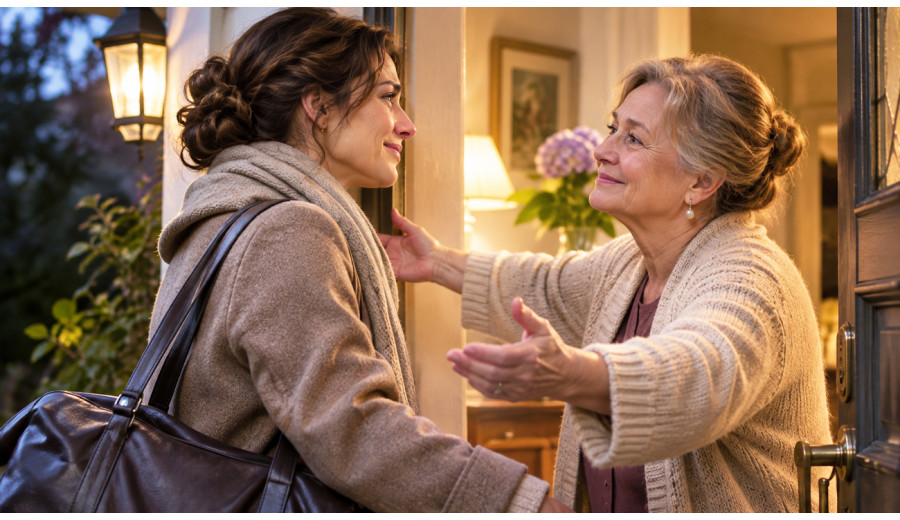
out loud, before anything happens. Tell your daughter, your
sister, your friend: “Whatever happens in your marriage, you can always come
home.” Don’t assume she already knows.
2. Notice
the quiet signs. She cancels plans, stops seeing old friends, makes excuses for
him, seems afraid of doing something wrong. Ask gently. Then listen without
rushing to fix it.
3. Believe
her. Don’t ask what she did to provoke it, and don’t send her back
“for the sake of the children.”
4. Put
safety first. Leaving can be the most dangerous moment, so let professionals
help her build a safety plan. Keep documents and some money where she can reach
them. If there is immediate danger, call the police.
5. Stay
after she leaves. Getting out is the first step. Rebuilding confidence, finances
and trust takes much longer, and nobody should have to do it alone.
A
Real-Life Example
Consider a woman, I’ll call
her Leah, who came to me after her divorce convinced that the problem was her.
Her husband never hit her. He just decided everything: what she wore, who she
saw, how much she could spend at the grocery store. It took months before she
could use the word “abuse” about her own marriage. When she finally said it,
she cried, and then she laughed. “So I’m not crazy,” she said. “It has a name.”
That was the day her
healing really started.
Where
to Find Help
New York
City: 24-Hour Domestic Violence Hotline 1-800-621-HOPE (4673)
United
States: National Domestic Violence Hotline 1-800-799-7233, or text START
to 88788
Israel: Welfare
Ministry hotline 118 (24/7, Russian available)
Austria:
Frauenhelpline gegen Gewalt 0800 222 555 (24/7, free)
In
immediate danger: 911 (US), 100 (Israel), 133 (Austria).
Svetlana ended by inviting
us to keep talking. I want to accept that invitation. Leaving is where the
danger ends. The healing comes after, and that is the work I do through
Unbreakable You. Every Sunday I offer free coaching, and you can book a free
discovery call with me at (718) 683-1750. Through Rise & Thrive Community,
my nonprofit, we offer free programs for children and adults who need a fresh
start. If you would like to help a woman or a child begin again, you can donate
at rtco.org.
Love does not leave
bruises,
and it never asks for
silence.
Every daughter should know
the way home,
and that the door is open.
My books,
including my latest, Unbreakable You, and the Unbreakable You Journal,
are available on Amazon. The Russian edition of Unbreakable You comes
out on December 1, and my next book, It’s Not Your Fault. It’s Your
Responsibility, is coming by the New Year.