Dopamine, drive, pleasure, and why everything suddenly feels like work
You used to be the woman who got things done. Work,
family, appointments, exercise, dinner, plans with friends. You somehow kept
all the balls in the air. But lately, even ordinary things can feel like work.
Maybe you sit in the car outside the grocery store for an
extra five minutes because you just don’t feel like going in. Or you finally
get a quiet evening to yourself, but instead of taking a walk, reading a book,
or calling a friend, you find yourself scrolling on your phone. Not because
you’re enjoying it that much. You simply don’t feel like doing anything else.
And eventually, you start wondering: “What happened to
me? Where did my motivation go?”
If you’re in your 40s or 50s, it may not be a lack of
discipline or willpower. Perimenopause doesn’t just change your periods.
Fluctuating estrogen and progesterone can also affect brain systems involved in
mood, concentration, sleep, motivation, and pleasure.
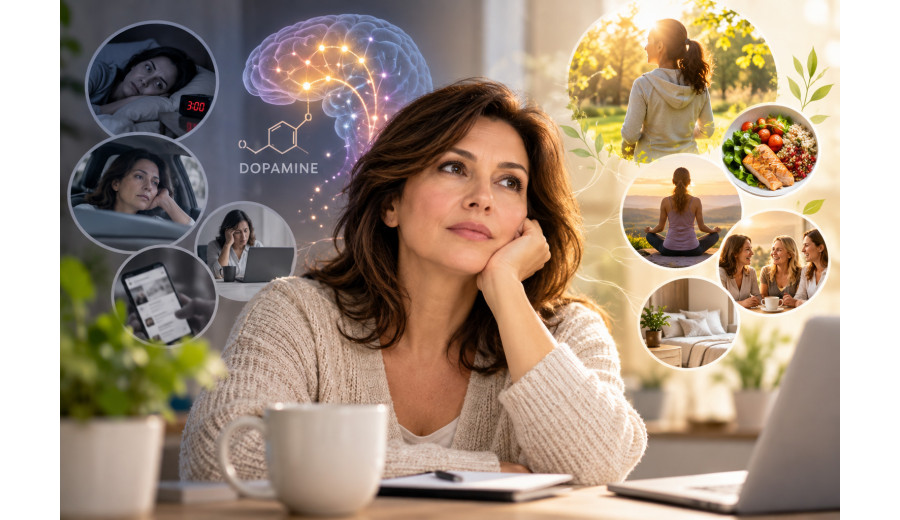
One important player is dopamine. Often called a
“feel-good” chemical, dopamine is actually involved in motivation, reward,
focus, and our drive to take action. It helps create that feeling of “I want
to do this,” followed by the satisfaction of “I did it.”
When this system isn’t working smoothly, life may simply
start to feel a little flat. Things that used to excite you don’t have the same
pull. Starting a workout feels harder. Making dinner becomes another chore.
Even answering a text gets pushed off until tomorrow.
But I wouldn’t blame everything on dopamine or hormones.
This is where I like to look at a woman through a functional wellness lens.
Imagine waking at 3 a.m. night after night, starting your
morning exhausted, grabbing coffee instead of breakfast, rushing through the
day, barely stopping for lunch, and living in a constant state of “go, go, go.”
By 6 p.m., you have nothing left.
Is that really a motivation problem?
I want to know what is happening with sleep, stress,
nutrition, blood sugar, gut health, inflammation, movement, nutrient status,
and hormonal changes. The body doesn’t operate in separate little boxes. The
brain communicates with the gut. Hormones interact with the nervous system.
Poor sleep affects energy, mood, appetite, and concentration. Chronic stress
affects how we think, eat, sleep, and recover.
That’s why instead of simply asking, “How do we boost
dopamine?” I prefer to ask, “Why is this woman no longer feeling like
herself?”
Sometimes we start with the basics: regular meals, enough
protein, movement, daylight, better sleep, meaningful connection, and true
rest. Other times, we need to look deeper at gut health, nutrient levels,
metabolic health, inflammation, and hormonal changes.
So if you keep thinking, “I used to handle everything.
What happened to me?” stop blaming yourself and ask a different question:
“What changed?”
Your body may not need more pushing. It may need more
support.
And if you’re not sure where to start, you’re always
welcome to reach out.