
January arrives with a familiar energy: fresh calendars,
renewed motivation, and the desire to finally take care of ourselves. We set
goals to move more, eat better, and feel stronger – yet by February, many resolutions
quietly fade. Why? Because true health isn’t built on willpower alone. It’s
built from the inside out, starting with one of the most powerful and
underestimated systems in your body: your gut.
When we talk about health and fitness, we often focus on
workouts, calories, and numbers on the scale. But real vitality begins deeper –
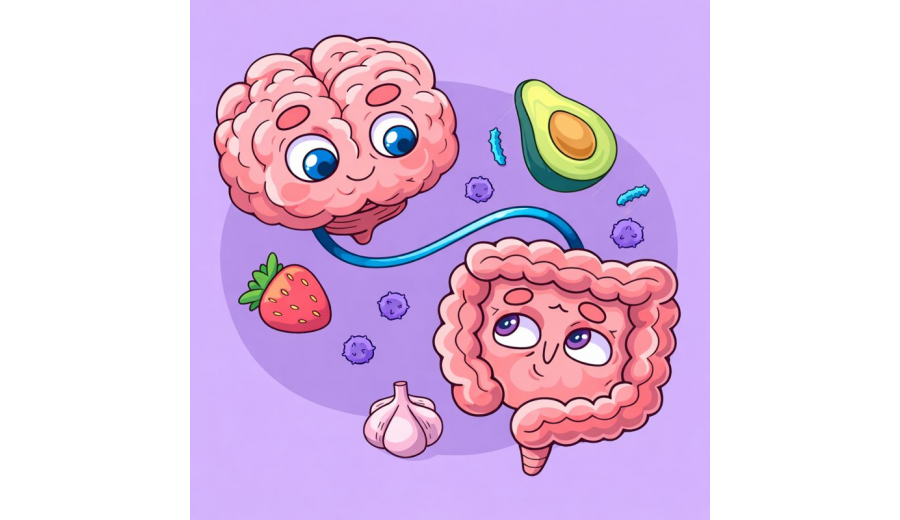
at the intersection of the mind-gut connection. Modern science now confirms
what ancient wisdom long suspected: your gut and brain are in constant communication,
shaping your energy levels, mood, immune system, and even motivation to
exercise.
In The Mind-Gut Connection, neurologist David Perlmutter
explains that the gut is often called our “second brain.” It houses trillions
of bacteria – collectively known as the microbiome – that influence how we
think, feel, and function. In fact, about 90% of serotonin, the
neurotransmitter responsible for happiness and emotional stability, is produced
in the gut, not the brain.
This means your gut health directly affects your mindset.
Have you ever noticed that when your digestion is off, your
mood, focus, and energy suffer too? That’s not a coincidence. Chronic stress,
poor sleep, highly processed foods, and sugar overload disrupt the gut lining
and microbiome balance. The result? Inflammation, brain fog, anxiety, fatigue,
and weakened immunity – hardly the foundation for a strong January reset.
From a fitness perspective, gut health is just as critical.
A healthy gut improves nutrient absorption, helping your muscles recover faster
and your body use fuel efficiently. An unhealthy gut, on the other hand, can
lead to bloating, sluggishness, cravings, and low endurance – making workouts
feel harder than they should.
So how do we support gut health as part of a January health
and fitness reset?
Start simple. Food is information, not just fuel. Focus on
whole, real foods that nourish beneficial gut bacteria: vegetables, leafy
greens, berries, fermented foods, healthy fats, and clean proteins. Fiber is
especially important – it feeds good bacteria and supports digestion. Equally
important is what we reduce: ultra-processed foods, excess sugar, and
artificial additives that disrupt the microbiome.
Movement also plays a powerful role. Moderate, consistent
exercise improves gut motility and microbial diversity. You don’t need extreme
workouts – walking, strength training, yoga, and stretching all support both
gut and brain health.
And finally, mindset matters. Stress is one of the fastest
ways to damage the gut lining. Deep breathing, gratitude practices, and mindful
pauses calm the nervous system, allowing the gut to heal and function properly.
When you manage stress, you’re not just protecting your mind – you’re
protecting your digestion, immunity, and long-term health.
This January, instead of chasing perfection, aim for
alignment. When your gut is supported, your mind becomes clearer, your body
stronger, and your motivation more sustainable. Health and fitness stop feeling
like a struggle and start feeling like self-respect.
Your reset doesn’t begin in the gym or on the scale.
It begins in the gut.