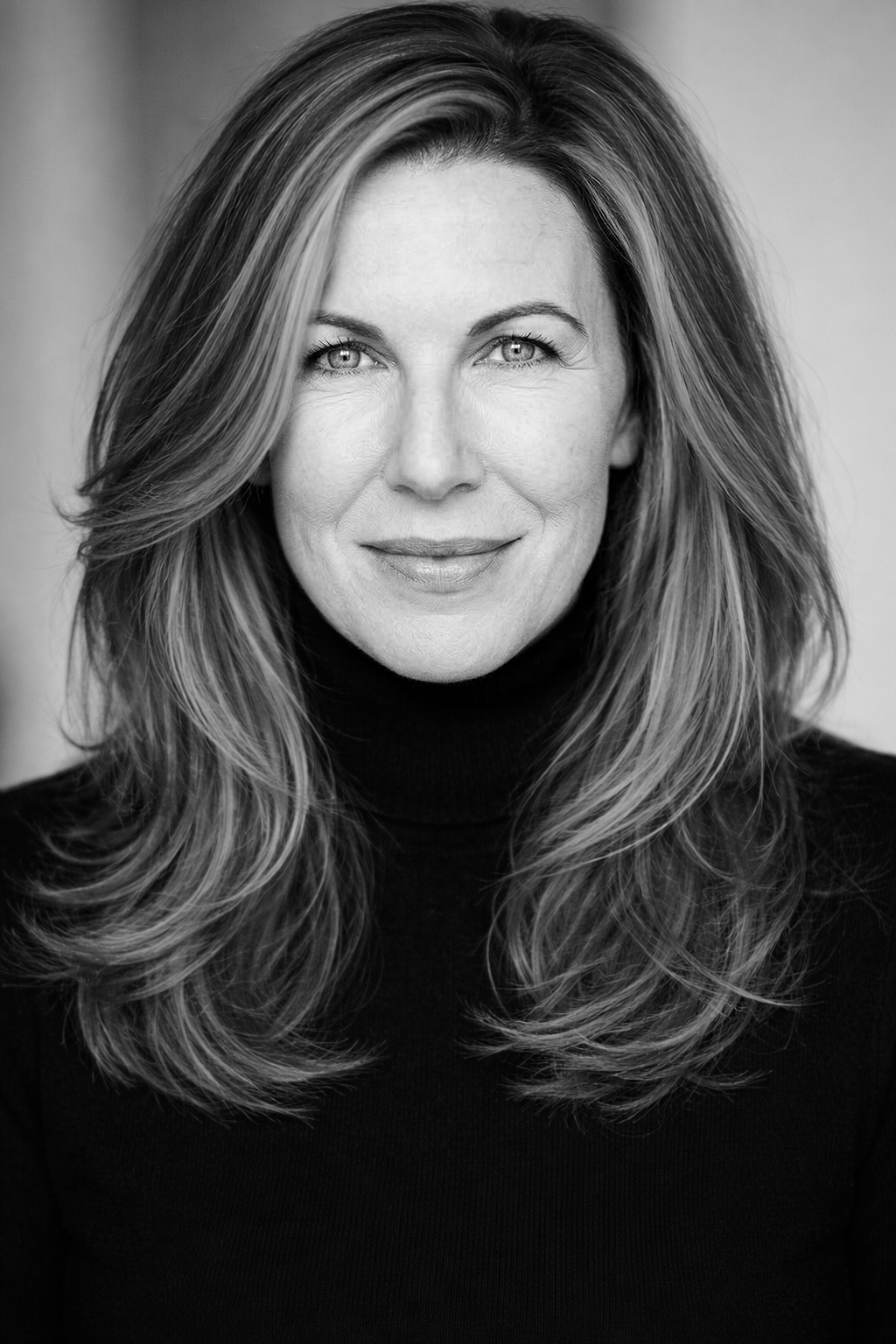
 Sandra Dubrov spent more than 25 years
developing home textiles and home products for major retailers. That experience
led her to a deeper question: how does the environment we live in shape our
emotional well-being and nervous system? She trained as a health coach at Columbia
University and founded Velelle.com to bring her approach – centered on color,
texture, light, and emotional wellness – into everyday life. Sandra lives and
works in New York.
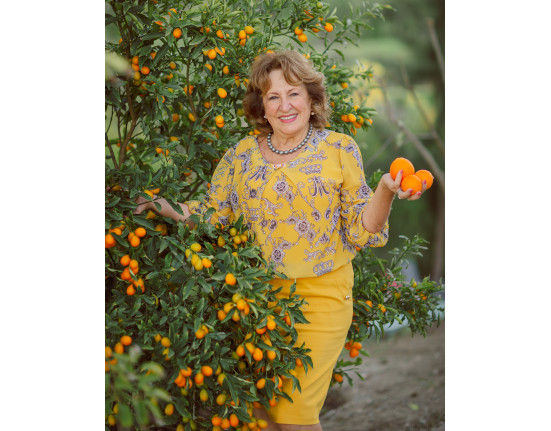
Sandra Dubrov spent more than 25 years
developing home textiles and home products for major retailers. That experience
led her to a deeper question: how does the environment we live in shape our
emotional well-being and nervous system? She trained as a health coach at Columbia
University and founded Velelle.com to bring her approach – centered on color,
texture, light, and emotional wellness – into everyday life. Sandra lives and
works in New York.
The Hidden Cost of Holding It All Together:
What 25 years of watching how people live
finally taught one designer about stress
There is a version of overwhelm that
rarely looks dramatic from the outside. It doesn't announce itself with
collapse. It appears in quieter ways. A jaw that has been tight for weeks.
Sleep that is interrupted at 3 AM for no obvious reason. A reaction to
something small that feels stronger than it should. An internal anxiety that
never fully settles, even when the day is over, and the house is finally quiet.
Many women know this state well. They keep
showing up, keep delivering, keep managing what needs to be managed. Work gets
done. Calls are returned. Family life moves forward. In many households, women
carry an especially dense web of responsibilities, balancing careers, children,
parents, homes, and community life with remarkable competence. From the
outside, everything appears intact. The strain stays invisible. And because
she's so good at making it look fine, nobody thinks to ask.
That invisible strain has become the
center of Sandra Dubrov’s work. Beneath everything she worked with over the
years, she kept noticing something her industry almost never talked about
directly. What she kept noticing, underneath all of it, was something her
industry never talked about directly. Color affects the nervous system. Light
at the wrong hour does something. Texture does something. The research existed.
It had existed for decades. Nobody had connected it to the woman lying awake at
3 AM, her jaw full of tension and a list that never gets shorter.
So she went deeper. The result was
Velelle, built around a simple but powerful idea: the home is not a neutral
space. It is either supporting your nervous system or adding to its load.
Color, light, and atmosphere aren't decorating decisions. They're biological
inputs, and most of us have no idea we can use them deliberately.
As that work evolved, one figure kept
appearing at its center. The woman who is capable, relied upon, and needed by
everyone around her. She carries family, work, household life, and community
with such consistency that few people stop to ask what it costs. The inner
strain stays hidden because she has become so skilled at making everything look
manageable. You probably know her. You might be her.
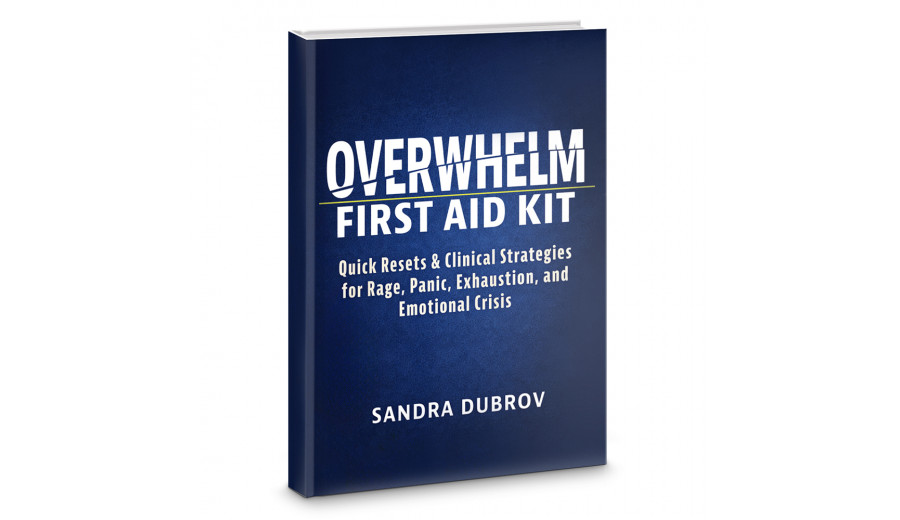
That recognition shaped Overwhelm First
Aid Kit, Dubrov's book for women in moments of emotional overload. It's built
around 20 specific scenarios, the kind that don't come up in polite
conversation. "Sustained Rage." "Caregiver Collapse."
"Why Is It Always Me?" Each one delivers clinical tools drawn from
five named therapeutic frameworks, written for someone already in the middle of
it, with no time and a racing pulse. No theory. No homework for later.
Something to do right now.
The coloring pages at the end of each
scenario aren't decoration. Every palette was chosen for what that specific
state needs from color. Deep teal for rage, because research links it to lower
cortisol. Deep indigo for sleeplessness, specifically to avoid the wavelengths
that push alertness higher. Twenty-five years of watching how color works on
the body went into those choices.
Strength is visible. The burden attached
to it often is not. Dubrov built her entire body of work around that gap, and
this book is the most direct thing she's made yet.