There are women whose lives cannot be summed up in a few
short lines. Their stories are not defined by events, but by the people they
gather around them. These women become the quiet center of a family:
generations come together around them, traditions are preserved in their homes,
and their words are remembered long after they are gone.
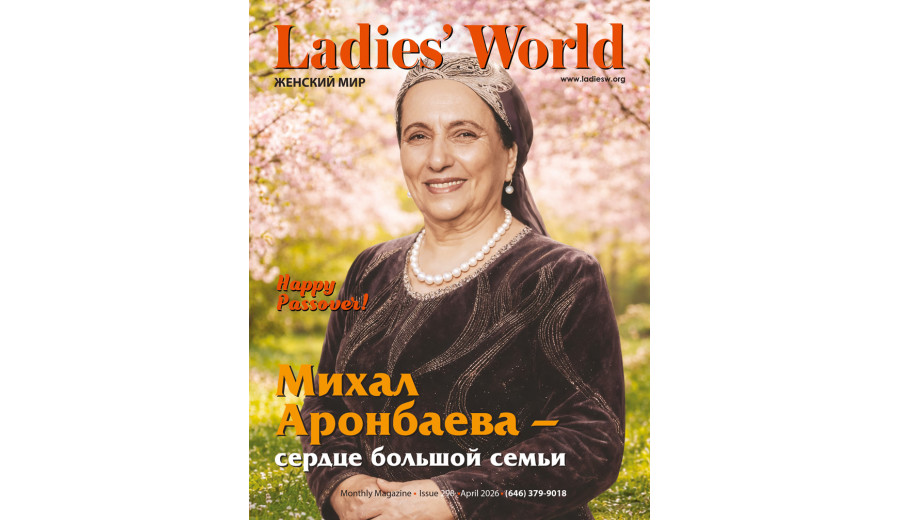
Michal Aronbaeva lived a long
life – ninety-five years. Her life included many hardships: the difficult war
and postwar years, life in remote villages without even the most basic
comforts, the responsibility of caring for a large family, and later, the
challenge of beginning again in a new country. Yet those who knew Michal
remember not the hardships, but her remarkable calm, kindness, and inner
strength.
She was a wife, a mother, a
grandmother, and the heart of a home to which family and friends were always
drawn. For Michal, family, respect, and devotion to tradition were not simply
values – they were a way of life.
We spoke with Michal’s
younger sister, Rachel Kandkhorova-Davydova, about the woman her family will
always remember.
– Rachel, if you had to describe Michal to
someone who never knew her, what would you say? What kind of person does she
remain in your family’s memory?
– To
us, Michal was, above all, a woman with an enormous heart. She was the second
of six children born to our parents, Malkiel and Burkho Kandkhorov. Our parents
worked very hard, so Michal had to grow up quickly.
She helped our mother
around the house, cared for the younger children, and took on responsibility as
though it came naturally to her. To us, she was more than an older sister – she
was our support. We always felt her care and her quiet strength.
Our generation grew up
quickly. These were difficult years: war, the postwar period, scarcity. But it
is in such times that character is formed.
There is one story that
says so much about who Michal was. When she was only thirteen, our mother
became gravely ill with typhus and spent an entire month in the hospital. At
home there were still small children, including our six-month-old brother,
Uriel. It was Michal who took full responsibility for the family. She cared for
the baby, looked after the younger children, and kept the household going. In
many ways, her selflessness saved both our little brother and our family.
– People often say that a person’s true
character is revealed in marriage. What was the bond between Michal and her
husband, Sholomkhai, like?
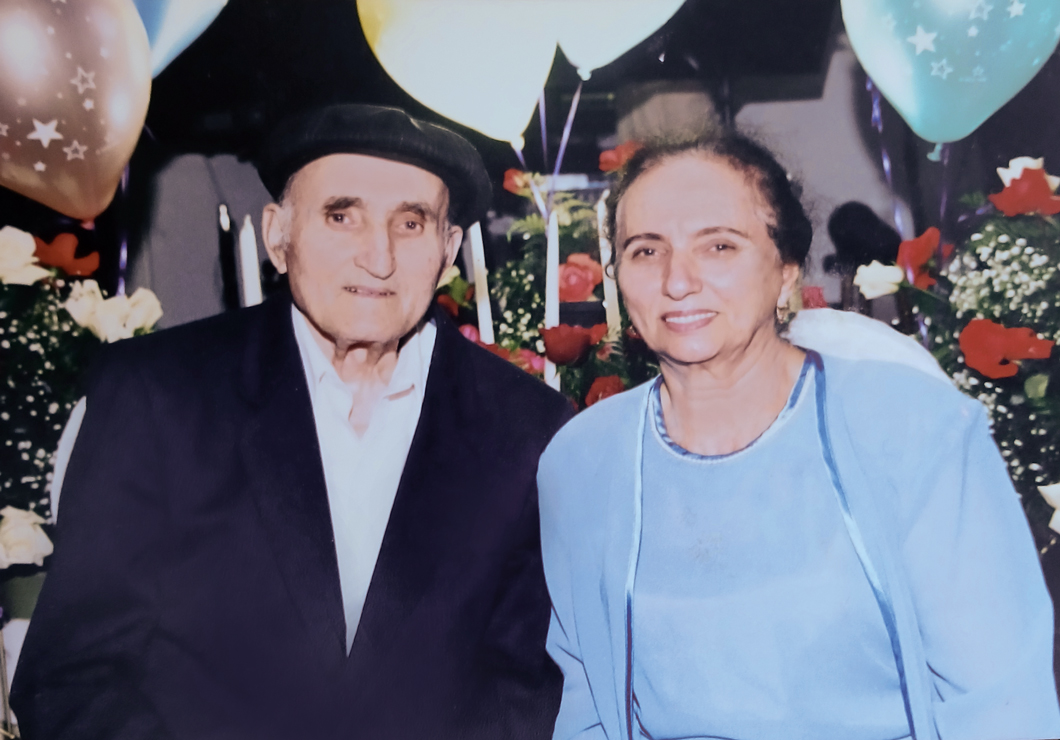
– Their
story began in 1949. Sholomkhai Aronbaev came to Samarkand to visit relatives.
He had served throughout the entire war, had been awarded medals and honors,
and later studied at a pedagogical institute.
It was there that he saw
Michal. They had known each other before, but that time he suddenly saw how
much she had changed, how she had grown into a young woman. Something stirred
in his heart, and soon afterward he came to our parents to ask for her hand in
marriage.
Every marriage is the
meeting of two worlds. Of course, they had different personalities. But what
always united them was respect, patience, and a sincere desire to understand
one another.
For example, Michal always
addressed her husband formally, using the respectful “you.” For her, it was a
natural expression of respect. And he, in turn, treated her with great love and
care.
There is one detail that
beautifully captures their relationship. When Michal prepared the table for
Shabbat, her husband would never begin the prayers or the meal until she herself
had sat down. To him, it was important to show honor to his wife. Today, we see
that their sons have carried on this same tradition in their own families.
– Their
married life began under very difficult circumstances. How did Michal face
those years?
– After
finishing his studies, her husband was assigned to teach in remote villages in
the Surkhandarya region – Angor, Shurchi, Jarkurgan. Life there was extremely
hard.
There was no electricity,
no gas, no proper heating. Water was delivered only once a week. The bathhouse
was far away, and there were almost no stores. Her husband rode his bicycle to
the district center to buy food.
But Michal never complained
about her fate, and she never resisted it. She always supported her husband.
She learned to bake bread
in an earthen tandyr oven. She learned Uzbek by speaking with the neighbors.
Her husband found her a job as the school librarian, and she grew to love it.
Michal was a curious person – she read constantly, remained interested in life,
and was always eager to learn something new.
– When
children came into the family, what place did motherhood hold in Michal’s life?
What values did she hope to pass on to her children?
– She
was a deeply loving and devoted mother.
Under those difficult
conditions, she gave birth to four children. Her first daughter was born in
1949 and tragically passed away at the age of nine months. Their second child,
a son named Nison, was born in Bukhara in 1952. Three years later came their
daughter Riva, and in 1957 their son Rafael was born.
Later, the family moved to
Dushanbe, where they had three more children: a son, Slavik, a daughter,
Mafrat, and another son, Aron. In all, they had six children.
Raising such a large family
on a teacher’s salary was not easy. But Michal never complained about hardship.
She simply lived for her family.
Later, she began working in
trade, and little by little life improved. The children grew up and received
educations. Nison became a merchandise specialist. Riva became a mathematician
and computer programmer. Slavik became an economist and was one of the first to
open a cooperative business, later helping his younger brother Aron. Rafael
served in the army and then became a watchmaker. Mafrat became a seamstress.
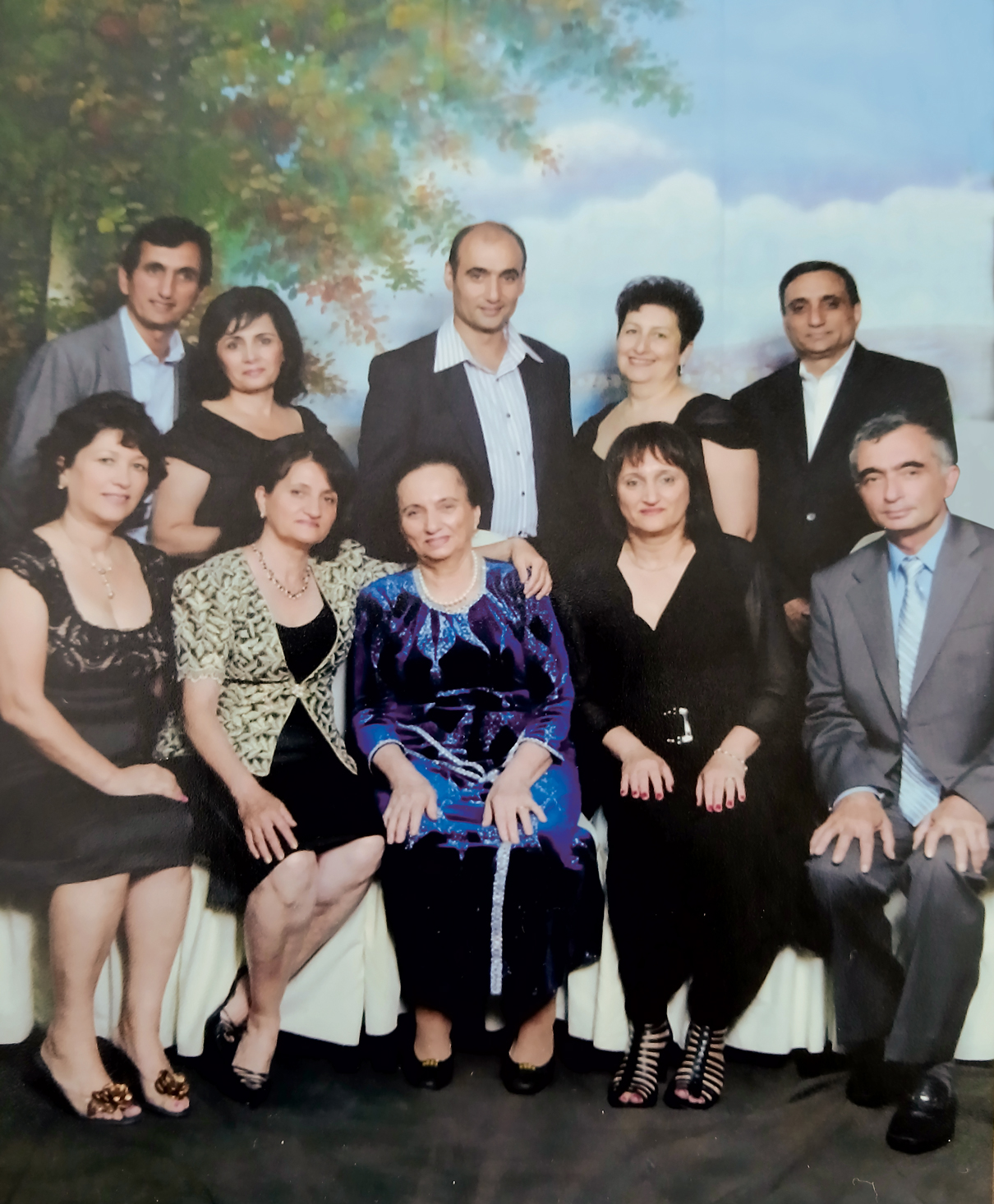
All of Michal and
Sholomkhai’s children built loving families of their own. But most importantly,
they grew up to be good and honorable people.
– From
the way you describe it, the home Michal and her husband created became a place
where everyone wanted to gather. What was the atmosphere in that house?
– Michal and her husband’s home was always open
to others. They were extraordinarily hospitable. Family and friends came not only
for holidays, but often simply for advice, comfort, or support.
Shabbat was always the most
special day. The entire family would gather – children, grandchildren,
great-grandchildren. There could be twenty-five or even thirty people around
the table.
Those were remarkable
evenings, filled with warmth, conversation, and guidance. The older generation
shared its wisdom, and the younger listened.
– In
1991, the family immigrated to America. How did Michal embrace this new chapter
in her life?
– With
great dignity.
In New York, the children
chose to live near their parents. Michal and her husband played an active role
in their grandchildren’s lives.
They walked them to school
and picked them up afterward. At home, Grandma Michal was always waiting – with
a hot meal and endless love.
To this day, the
grandchildren remember those years with gratitude. They grew up surrounded by
family support, honesty, respect for hard work, and devotion to Jewish
traditions.
– In
Jewish tradition, there is the image of the eshet chayil – a woman of valor. Would you say Michal was
such a woman?
– Yes.
She truly was an eshet
chayil – a woman of strength and dignity.
She lived a long and
beautiful life – ninety-five years. A life that included war, poverty,
difficult years, and the responsibility of caring for a large family. But she
never became bitter. She never complained. She remained calm, grateful, and
full of light.
Until her very last days,
she remained independent. She read books and newspapers, played backgammon and
cards, and stayed interested in the world around her. She always thanked God
for everything she had and often said that she was content with her life and
considered herself the happiest woman in the world.
My sister passed away
quietly, in her sleep, without troubling anyone – like an angel, with a loving
heart.
– What
is the greatest legacy Michal left behind?
– Her
family.
Her children,
grandchildren, and great-grandchildren. A love of tradition. Respect for one
another. The understanding that one should live with honesty and dignity.
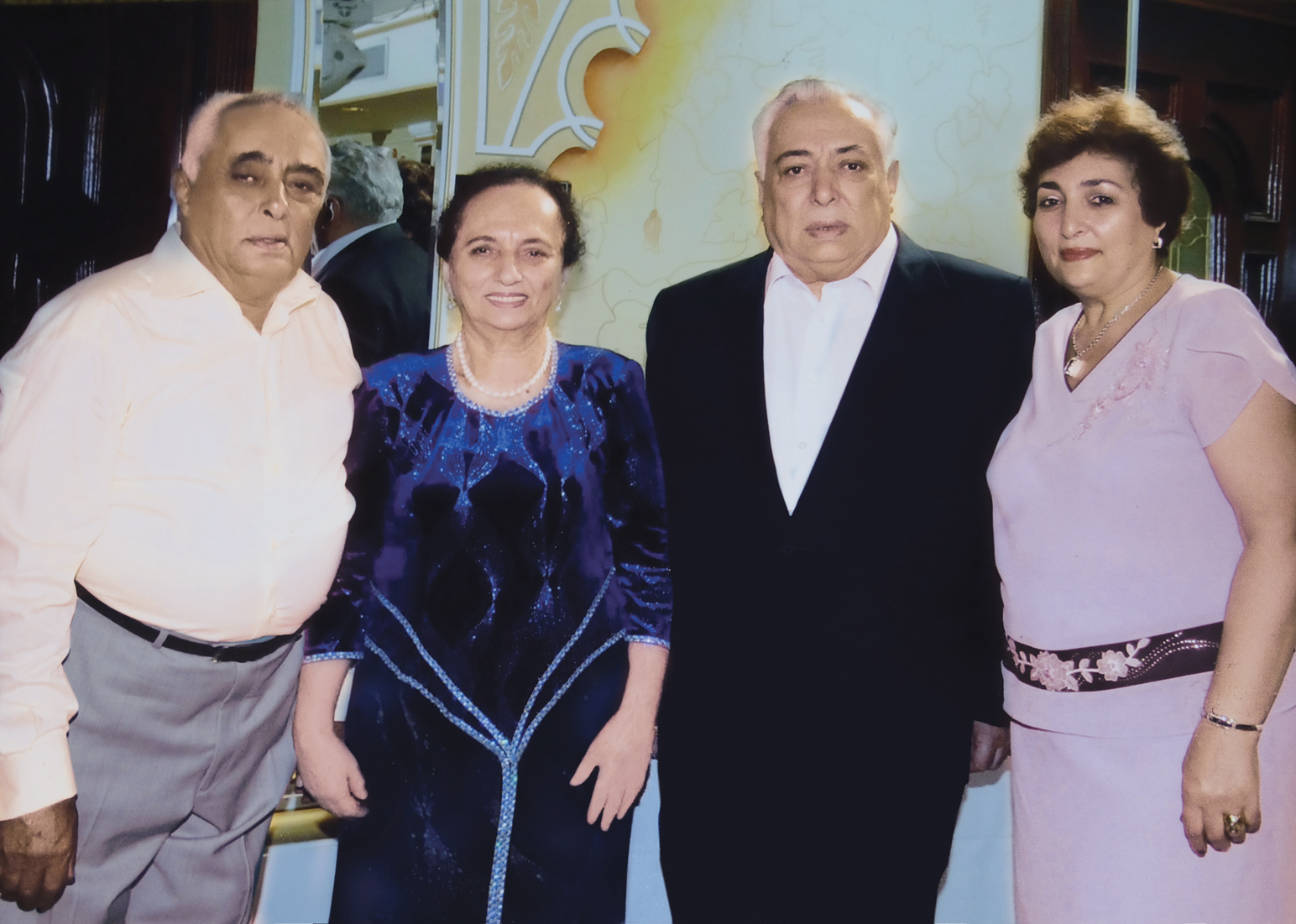
To us, she will always
remain an example of a woman, a mother, and the guardian of her family.
She was the heart of our family.