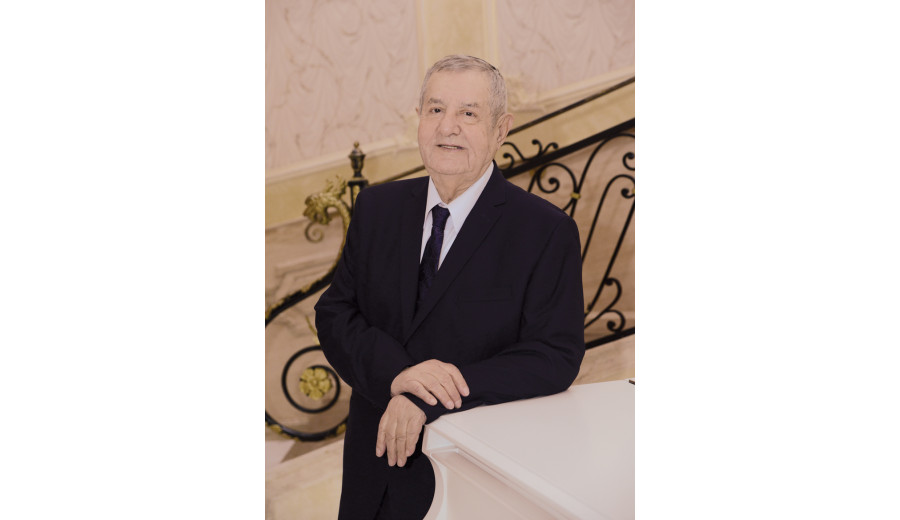
Mr. Abram
Davydov was born in 1931 and was only ten years old when World War II began
reshaping the world around him. Scarcity and instability were not abstractions;
they were daily realities. Mr. Davydov came from humble beginnings and was
raised by parents who did everything they could to provide for their five
children. He loved reading and discovered early on that education was the only
reliable currency.
After
graduating from high school, Mr. Davydov enrolled in the University of National
Economy in Tashkent. He later became a leading economist and steadily advanced
through the Soviet financial administration, eventually rising to the position
of First Deputy Finance Commissioner of the Fergana Region. He oversaw budgets,
supervised tax collection, and managed public expenditures. With over four
decades of service, Mr. Davydov earned a reputation for competence, integrity,
and sound judgment.
Yet Mr.
Davydov understood a structural truth: he
would never become Finance Commissioner of the Region – not for lack of
experience or capability, but because he was Jewish. Discrimination within
the Soviet administrative hierarchy was rarely explicit. Advancement had
boundaries. Influence had conditions.
Still, he
remained committed to his work and to his principles. Despite holding senior office, he consistently supported the Jewish
community, both institutionally and personally, offering assistance whenever it
was needed.
In 1957, he married the love of his
life, Miryam. Together they shared 60 years, raised three kids and built a
close-knit family. Family was not separate from his public life; it was the
foundation that gave it meaning.
Then came
1989. Ethnic violence erupted in the Fergana Valley between Uzbeks and Meskhetian
Turks. Homes were burned. Families fled. Mr. Davydov was tasked with organizing
the financial relocation of approximately 94,000 Meskhetian Turks to northern
regions of Russia. Mr. Davydov became a bureaucratic bridge between violence
and exile. He saw panic, fear, and displacement not as figures on paper, but as
faces – families uprooted, futures uncertain.
After
forty years of service, titles, and influence, he recognized that achievement
within the Soviet Union did not guarantee security for his family. In 1991, as
the state itself unraveled, Mr. Davydov made a deliberate decision to leave for
the United States – not as a defeated man, but as a determined one.
What
distinguishes Mr. Davydov’s life is that he refused to allow adversity define
his character.
When I asked Mr. Davydov what principles
guided him through the most challenging moments of his life, he did not speak
of rank or status. Instead, he spoke of character:
- Never
speak down to anyone; even if they are younger, always treat them with respect.
- Always
be grateful for warmth, food, and stability.
- Preserve
sincerity in all relationships.
- Love
your children, they are what endures long after you.
- Maintain
a pure heart throughout your life
- True
love is rooted in loyalty and genuineness; it is not concerned with mere
transactions.
- Life
is measured by actions, not by years.
- A
person must always remember that their life is in God’s hands.
- True
unity can only take root when we replace jealousy with genuine love for
one another.
- The
secret to a long life lies in honesty, maintaining a pure heart, and
showing kindness to others.
In the end, the most significant choice in Abram Davydov’s life was not the status he attained but his quiet determination to leave it behind – carrying with him his conscience, his faith, and the humanity that could not be taken from him.